Program
Final program
Three days of SpacSec 2026: 59 papers in nine sessions, four plenary talks, and two round tables. Explore the schedule, find your room, and open a session to see its papers.
26–28 October · ITMO University
Three days at a glance
All times are Moscow time (MSK, UTC+3).
Monday
October 26
Opening · Plenaries 1–2 · Sessions 1–3Coffee break
Opening session
Sandeep Joshi, Igor Kotenko, Aleksandr Menschikov, Andrey Ronzhin
From Alert to Action: Reinforcement Learning for Autonomous Cyber Defence of Terrestrial and Space Systems
Dr. Sandeep JoshiManipal University Jaipur, India
Chair: Igor Kotenko
Method for analyzing the cyber-resilience of self-healing blockchain platforms against quantum attacks
Prof. Sergei A. PetrenkoSirius University of Science and Technology, Russia
Chair: Igor Kotenko
Lunch
Parallel sessions
Information security of critical infrastructures and cyber-physical systems
Chairs: Andrey Chechulin, Igor Saenko
Paper list7 — Session 1
-
#67
On some aspects of trust monitoring in autonomous control systems
Alexander A. Grusho, Michael Zabezhailo and Victor Piskovski
Download slides (PDF): On some aspects of trust monitoring in autonomous control systems -
#60
Adaptive Distributed Denial-of-Service Defense Using Behavioral Analysis and Machine Learning
Mikhail Mitrofanov, Alexander Kurakin and Nikolay Kramskoy
Download slides (PDF): Adaptive Distributed Denial-of-Service Defense Using Behavioral Analysis and Machine Learning -
#31
Evaluation of Cyber Threat Detection Results in Energy Systems Based on Threat Intelligence and Digital Twin
Igor Kotenko, Igor Saenko, Evgenii Mityakov and Anton Loskutov
Download slides (PDF): Evaluation of Cyber Threat Detection Results in Energy Systems Based on Threat Intelligence and Digital Twin -
#63
Rule-based approach to detect modifications on layers of 3D products
Aleksei Meleshko, Vasily Desnitsky and Igor Kotenko
Download slides (PDF): Rule-based approach to detect modifications on layers of 3D products -
#3
Comparison of functional and information security requirements for Critical facilities
Ilya Livshitz
Download slides (PDF): Comparison of functional and information security requirements for Critical facilities -
#58
Application of Zero Trust Architecture for Information Security of Large Language Models in Corporate Infrastructure
Oleg Lauta, Denis Mahov and Nikita Vasilev
Download slides (PDF): Application of Zero Trust Architecture for Information Security of Large Language Models in Corporate Infrastructure -
#4
Ensuring operational audit of critical information infrastructure management systems
Ilya Livshitz
Download slides (PDF): Ensuring operational audit of critical information infrastructure management systems
Security of LLMs, multi-agent systems and generative AI
Chairs: Andrei Petrovski, Maria Lapina
Paper list7 — Session 2
-
#15
Development of Information Security Policies Using Generative Artificial Intelligence (Large Language Models)
Elizaveta Lykova and Anatolii Minzov
Download slides (PDF): Development of Information Security Policies Using Generative Artificial Intelligence (Large Language Models) -
#5
Adversarial Benchmarking of Long-Term Memory Security in LLM-Based Multi-Agent Systems
Artem Kolbeev, Andrei Petrovski and Igor Kotenko
Download slides (PDF): Adversarial Benchmarking of Long-Term Memory Security in LLM-Based Multi-Agent Systems -
#23
Application of Large Language Models to Information Security Risk Assessment via Simulation Modelling
Alexey Nazyvaev and Anatoly Minzov
Download slides (PDF): Application of Large Language Models to Information Security Risk Assessment via Simulation Modelling -
#70
A Decentralized Semantic Attestation Method for Protecting Multi-Agent LLM Systems from Cascading Adversarial Injections
Sergey Serko and Andrei Petrovski
Download slides (PDF): A Decentralized Semantic Attestation Method for Protecting Multi-Agent LLM Systems from Cascading Adversarial Injections -
#152
Methods for Detecting Prompt Injection Attacks in LLM Applications
Sherzodjon Yarmatov, Oleg Sanamyan, Vitalii Lapin, Maria Lapina and Gleb Semenov
Download slides (PDF): Methods for Detecting Prompt Injection Attacks in LLM Applications -
#61
Deterministic Defense Methods Against Probabilistic Attacks: A Study of the Ineffectiveness of Traditional Approaches to Securing Large Language Models
Mikhail Mitrofanov, Alexander Kurakin and Nikolay Kramskoy
Download slides (PDF): Deterministic Defense Methods Against Probabilistic Attacks: A Study of the Ineffectiveness of Traditional Approaches to Securing Large Language Models -
#8
Trajectory-based cluster neighborhood analysis for detecting rare anomalous events caused by AI agent behavior
Oleg Sheluhin, Andrey Osin and Konstantin Khalizev
Download slides (PDF): Trajectory-based cluster neighborhood analysis for detecting rare anomalous events caused by AI agent behavior
Data analysis, machine learning and decision support
Chairs: Lev Utkin, Andrei Konstantinov
Paper list7 — Session 3
-
#9
Image Recognition in Role Learning Systems Based on Fuzzy Kolmogorov-Arnold Networks
Andrey Sukhanov and Sergey Kovalev
Download slides (PDF): Image Recognition in Role Learning Systems Based on Fuzzy Kolmogorov-Arnold Networks -
#52
Analytic Unary Density Trees for Inspectable Anomaly Scoring
Andrei Konstantinov, Lev Utkin and Stanislav Kirpichenko
Download slides (PDF): Analytic Unary Density Trees for Inspectable Anomaly Scoring -
#53
Attention-Based Estimation of Individual Causal Benefit Probabilities under Dose Variation
Lev Utkin, Andrei Konstantinov, Stanislav Kogan and Natalya Verbova
Download slides (PDF): Attention-Based Estimation of Individual Causal Benefit Probabilities under Dose Variation -
#22
Context-Instrumental Data Distillation for Kubernetes Manifest Generation: Method and Experimental Evaluation
Andrey Kozachok, Anatoliy Bakaev, Aleksandr Kozachok, Shamil Magomedov and Artem Noev
Download slides (PDF): Context-Instrumental Data Distillation for Kubernetes Manifest Generation: Method and Experimental Evaluation -
#62
Solving Applied Problems under Constraints Using Machine Learning Methods
Vladimir Muliukha, Aleksey Vostrov, Dmitrii Motorin, Vadim Glazunov and Mikhail Kurochkin
Download slides (PDF): Solving Applied Problems under Constraints Using Machine Learning Methods -
#17
Adaptive Neural Ensemble for X-Ray Preprocessing in Clinical Decision Support Systems
Ilya Mishchenko and Anton Misnik
Download slides (PDF): Adaptive Neural Ensemble for X-Ray Preprocessing in Clinical Decision Support Systems -
#19
Workload Analysis: Uncertainty and Multi-criteria
Alexandra Chudinova
Download slides (PDF): Workload Analysis: Uncertainty and Multi-criteria
Coffee break
New Trends in Cybersecurity
Moderators: Sergei A. Petrenko
Speakers: Igor B. Saenko, Eugine S. Abramov, Alexey M. Vulfin, Ilya Yu. Popov, Aleksandr A. Menshchikov
Tuesday
October 27
Plenaries 3–4 · Sessions 4–6 · DinnerRegistration
Coffee break
Methodology and Technologies for Proactive Management of Space Edge Computing
Prof. Boris V. SokolovSt. Petersburg Federal Research Center of the Russian Academy of Sciences (SPC RAS), Russia
Chair: Igor Kotenko
Multilevel structured approach for digital watermarking: multimedia data protection survey and perspectives
Prof. Sergey V. BezzateevITMO University, Russia
Chair: Igor Kotenko
Lunch
Parallel sessions
Detection of anomalies, intrusions and malware
Chairs: Oleg Sheluhin, Andrey Osin
Paper list7 — Session 4
-
#7
Cascade Model of Rare Multi-Label Anomalous Events in a Computer Network
Dmitriy Rakovskiy and Oleg Sheluhin
Download slides (PDF): Cascade Model of Rare Multi-Label Anomalous Events in a Computer Network -
#11
Detecting Anomalies in Network Traffic Data and Its Graphical Representation Using Transformers
Maxim Gorda and Ksenia Zhernova
Download slides (PDF): Detecting Anomalies in Network Traffic Data and Its Graphical Representation Using Transformers -
#20
System Call Chain Profiling of Containerized Applications for Security Regression Testing in CI/CD Pipelines
Konstantin Chebunin
Download slides (PDF): System Call Chain Profiling of Containerized Applications for Security Regression Testing in CI/CD Pipelines -
#59
Comparative Analysis of Machine Learning Algorithms for Anomaly Detection in Time Series of User Activity in Corporate Systems
Sergei Sokolov, Denis Mahov and Viсtor Kochin
Download slides (PDF): Comparative Analysis of Machine Learning Algorithms for Anomaly Detection in Time Series of User Activity in Corporate Systems -
#69
A Reproducible Evaluation Framework for Immune-Augmented Intrusion Detection
Anton Shilov, Andrei Petrovski and Igor Kotenko
Download slides (PDF): A Reproducible Evaluation Framework for Immune-Augmented Intrusion Detection -
#148
Behavior-based Malware Detection in CAPEv2 Sandbox Using Deep Learning
Dmitry Levshun and Diana Levshun
Download slides (PDF): Behavior-based Malware Detection in CAPEv2 Sandbox Using Deep Learning -
#145
Calibrating Evolutionary Game Payoffs from Malware Execution Traces: A Signature-Conditional Equilibrium Study on WinMET 2025
Tran Duc Le, Truong Duy Dinh, Igor Ushakov and Dinh Hai Nguyen
Download slides (PDF): Calibrating Evolutionary Game Payoffs from Malware Execution Traces: A Signature-Conditional Equilibrium Study on WinMET 2025
Attack analysis, robustness and evaluation of AI models
Chairs: Evgenia Novikova, Alexey Magazev
Paper list7 — Session 5
-
#25
Analysis of Attention Zone Shifts in a Medical Image Classifier Under FGSM Attack: A Comparative Study of Standard and Robust Models Using the Grad-CAM++ Method
Aleksei Shevchenko, Daniil Skaldin, Ilya Sokolov, Yuri Trofimov and Alexey Averkin
Download slides (PDF): Analysis of Attention Zone Shifts in a Medical Image Classifier Under FGSM Attack: A Comparative Study of Standard and Robust Models Using the Grad-CAM++ Method -
#41
Approach to the evaluation of the AI model robustness to adversarial attacks
Evgenia Novikova and Aleksandr Sukhanov
Download slides (PDF): Approach to the evaluation of the AI model robustness to adversarial attacks -
#66
An Enhanced Deep Ensemble Learning Approach for Accurate Phishing Website Detection
Jenefa J, Mary Anita E A, Vinodha D, Maria Lapina and Vitalii Lapin
Download slides (PDF): An Enhanced Deep Ensemble Learning Approach for Accurate Phishing Website Detection -
#72
Beyond Accuracy: A Resource-Aware Comparative Evaluation of Machine Learning Models for Wearable Health Monitoring
Ansh Kaushik, Vimmi Malhotra and Divik Arora
Download slides (PDF): Beyond Accuracy: A Resource-Aware Comparative Evaluation of Machine Learning Models for Wearable Health Monitoring -
#6
A Markov-Based Framework for Security Metrics and Optimal Defense Using CAPEC Attack Patterns and CVSS
Alexey Magazev, Valeria Gorohova, Yana Seryogina and Pavel Lozhnikov
Download slides (PDF): A Markov-Based Framework for Security Metrics and Optimal Defense Using CAPEC Attack Patterns and CVSS -
#142
Robustness of Smart Grid Load Forecasting Models to Adversarial Attacks
Gleb Semenov, Maria Lapina, Amjad Gawanmeh, Vitalii Lapin and Oleg Sanamyan
Download slides (PDF): Robustness of Smart Grid Load Forecasting Models to Adversarial Attacks -
#16
Investigating the Robustness of a Classifier for Texts Generated by LLMs to Automatic Paraphrasing
Nikita Kurganov
Download slides (PDF): Investigating the Robustness of a Classifier for Texts Generated by LLMs to Automatic Paraphrasing
Cybersecurity, compliance and incident management
Chairs: Eugine Abramov, Alexey Vulfin
Paper list7 — Session 6
-
#10
Ensuring Information Security of Systems with Integrated AI Technologies: A Comprehensive Approach to Security Auditing
Alena Stolnikova, Sergey Porshnev and Dmitry Khoroshkeev
Download slides (PDF): Ensuring Information Security of Systems with Integrated AI Technologies: A Comprehensive Approach to Security Auditing -
#12
System Architecture for Legally Compliant Collection and Preprocessing of Digital Evidence in Incident Investigation
Maxim Gorda and Pavel Sharikov
Download slides (PDF): System Architecture for Legally Compliant Collection and Preprocessing of Digital Evidence in Incident Investigation -
#40
Semantic Matching of Cybersecurity Requirements and Internal Policy Documents for Automated Compliance Assessment
Maxim Shamanaev and Alexey Filippov
Download slides (PDF): Semantic Matching of Cybersecurity Requirements and Internal Policy Documents for Automated Compliance Assessment -
#54
Cyber threat intelligence data analysis system based on knowledge graphs
Alexey Vulfin, Andrey Lutskovich and Anastasia Kirillova
Download slides (PDF): Cyber threat intelligence data analysis system based on knowledge graphs -
#55
Technology for the synthesis of constructive information protection
Pavel Sundeev
Download slides (PDF): Technology for the synthesis of constructive information protection -
#57
Formalization of the semantic gap in projecting cyber threat models onto computational forensics tasks
Eugine Abramov and Margarita Knyazeva
Download slides (PDF): Formalization of the semantic gap in projecting cyber threat models onto computational forensics tasks -
#68
An Approach to Ensuring Information Security of an Intelligent Control System for the Functioning of Tutoring Integrated Expert Systems: Integration of Simulation Modeling, Temporal Inference and Cognitive Engineering Methods
Galina Rybina and Andrey Grigoryev
Download slides (PDF): An Approach to Ensuring Information Security of an Intelligent Control System for the Functioning of Tutoring Integrated Expert Systems: Integration of Simulation Modeling, Temporal Inference and Cognitive Engineering Methods
Coffee break
AI and Cybersecurity
Moderators: Andrey A. Chechulin, Michael I. Zabezhailo
Speakers: Evgenia S. Novikova, Darina V. Okuneva, Abdulkhamid Ya. Buchaev
Dinner
Wednesday
October 28
Sessions 7–9 · Closing · ExcursionRegistration
Coffee break
Parallel sessions
Safety of space and unmanned systems
Chairs: Boris Sokolov, Ilya Popov, Olga Krivorotko
Paper list6 — Session 7
-
#36
Model-based and algorithmic support for proactive control of distributed measurements and calculations performed by a multi-satellite constellation
Anton Baranov, Valerii Zakharov and Boris Sokolov
Download slides (PDF): Model-based and algorithmic support for proactive control of distributed measurements and calculations performed by a multi-satellite constellation -
#51
Assessing the Degree of Autonomy of Unmanned Aerial Vehicles: Methodological Aspects and Fuzzy-Possibility Modeling
Alexandr Spesivtsev, Yuri Tilichko and Vasily Spesivtsev
Download slides (PDF): Assessing the Degree of Autonomy of Unmanned Aerial Vehicles: Methodological Aspects and Fuzzy-Possibility Modeling -
#85
Large-scale agents cooperative attack-defense control in high-dimensional environments based on deep reinforcement learning
Olga Krivorotko, Nikolay Zyatkov, Ilya Markov, Anastasiia Murzina, Yakov Scherbina and Konstantin Pronin
Download slides (PDF): Large-scale agents cooperative attack-defense control in high-dimensional environments based on deep reinforcement learning -
#14
Subjective Logic-based Trust and Reputation model for FANETs
Timofey Melnikov, Evdokiia Galkina and Ilya Popov
Download slides (PDF): Subjective Logic-based Trust and Reputation model for FANETs -
#30
Numerical Optimization Method for Satellite Constellation Control in Area Surveying Problems Using a GPU-Accelerated Simulator
Pavel Chertovskikh, Andrey Boiko and Ilya Popov
Download slides (PDF): Numerical Optimization Method for Satellite Constellation Control in Area Surveying Problems Using a GPU-Accelerated Simulator -
#93
Benchmarking Operational-Leak Risk in Open-Weight LLMs for Space and Counterspace Attacks
Mohd Adnan and Aasim Zafar
Download slides (PDF): Benchmarking Operational-Leak Risk in Open-Weight LLMs for Space and Counterspace Attacks
Cryptography, quantum, blockchain and formal methods
Chairs: Sergey Bezzateev, Anatoly Korobeynikov
Paper list6 — Session 8
-
#13
Analysis of the application of the Lenstra-Lenstra-Lovasz algorithm in lattice cryptosystems
Anatoly Korobeynikov
Download slides (PDF): Analysis of the application of the Lenstra-Lenstra-Lovasz algorithm in lattice cryptosystems -
#49
Review of Synchronization Algorithms in Quantum Key Distribution Systems
Anton Pljonkin, Sandeep Joshi, Pradeep Kumar Singh and Gennady Veselov
Download slides (PDF): Review of Synchronization Algorithms in Quantum Key Distribution Systems -
#56
Differential and Linear Cryptoanalysis Of The Kuznyechik’s Three Rounds
Evgeniya Ishchukova
Download slides (PDF): Differential and Linear Cryptoanalysis Of The Kuznyechik’s Three Rounds -
#73
Formal Verification of a Typical Smart Contract for the Innochain Blockchain
Anastasija Krasnenkova
Download slides (PDF): Formal Verification of a Typical Smart Contract for the Innochain Blockchain -
#91
Application of a Fail-Stop Signature Mechanism in Satellite Group Authentication
Andrei Golovanov, Anastacia Kiryanova and Sergey Bezzateev
Download slides (PDF): Application of a Fail-Stop Signature Mechanism in Satellite Group Authentication -
#33
Improving the efficiency of response to information security incidents based on a hybrid mesh network architecture and blockchain technology
Igor Saenko, Vladislav Sheviakov, Vladimir Sadovnikov and Andrey Chechulin
Download slides (PDF): Improving the efficiency of response to information security incidents based on a hybrid mesh network architecture and blockchain technology
Biometric security and authentication
Chairs: Vasily Desnitsky, Viktoriia Korzhuk
Paper list5 — Session 9
-
#46
Robust ECG Biometric Authentication Using a Hybrid Deep Learning Model with Adaptive Beat Aggregation
Mohamed Azab and Viktoriia Korzhuk
Download slides (PDF): Robust ECG Biometric Authentication Using a Hybrid Deep Learning Model with Adaptive Beat Aggregation -
#18
Artifact Synthesis for Robustness Assessment of Palm-Dorsal Vein Biometric Systems
Daria Goncharenko, Oleg Kravchenko, Pavel Mizinov and Dobroslav Egorov
Download slides (PDF): Artifact Synthesis for Robustness Assessment of Palm-Dorsal Vein Biometric Systems -
#48
ECGAuthNet: A Segment-Adaptive CNN Architecture for Variable-Length ECG Biometric Authentication
Mohamed Azab and Viktoriia Korzhuk
Download slides (PDF): ECGAuthNet: A Segment-Adaptive CNN Architecture for Variable-Length ECG Biometric Authentication -
#24
PAI on the skin's surface: A New Attack Vector for Dorsal Vein Biometrics
Pavel Mizinov, Dobroslav Egorov, Oleg Kravchenko and Natalia Konnova
Download slides (PDF): PAI on the skin's surface: A New Attack Vector for Dorsal Vein Biometrics -
#50
Multimodal Biometric Authentication using Paired ECG and PPG Signals via a Multiple Beat Aggregation Algorithm
Mohamed Azab and Viktoriia Korzhuk
Download slides (PDF): Multimodal Biometric Authentication using Paired ECG and PPG Signals via a Multiple Beat Aggregation Algorithm
Closing session
Lunch
Excursion
Final program · Updated 24 October 2026
Plenary talks
All four plenary sessions are chaired by Igor Kotenko.
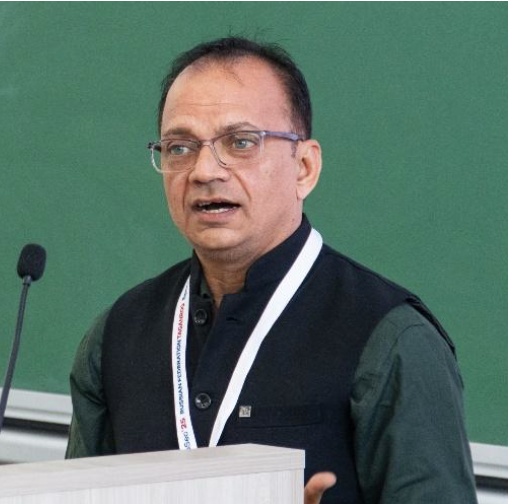
Dr. Sandeep Joshi
Manipal University Jaipur, India
From Alert to Action: Reinforcement Learning for Autonomous Cyber Defence of Terrestrial and Space Systems
Download slides (PDF): From Alert to Action: Reinforcement Learning for Autonomous Cyber Defence of Terrestrial and Space SystemsAbstract
Security teams cannot read every alert, and static rules age quickly against adaptive attackers. This keynote shows how reinforcement learning (RL) lets an intrusion detection system learn from the consequences of its actions. It can then decide what to allow, alert on, or block, instead of only flagging traffic. The talk places RL among AI, machine learning and deep learning in a security stack. It covers the main types and variations, the results so far, and the weak points: adversarial evasion and the gap between simulation and real networks. The session then turns to contested domains. The 2022 KA-SAT attack and the limits of onboard computing show how defence differs in space. Attendees leave with a staged path from simulation to autonomous action, and a clear sense of where RL is ready and where it is not.
About the speaker: Dr. Sandeep Joshi
Dr. Sandeep Joshi is a highly accomplished academician with extensive experience in teaching, research, and academic administration. He holds a B.E., M.Tech., and Ph.D. in Computer Science & Engineering and is presently heading Atal Incubation Centre at Manipal University Jaipur (MUJ), India. With over 24+ years of academic and administrative experience, Dr. Joshi has served in leadership roles, including Head of the Department and Deputy Director - Society Connect. He is actively involved in professional organizations as a senior member of IEEE and a member of ACM. He has played a key role in organizing and chairing sessions at international conferences and has been instrumental in hosting the ICCT and SpacSec conference series.
Dr. Joshi’s research contributions include over 60 publications in reputed international journals and conferences. His research interests focus on security, networking, and cloud computing. He has served as a guest editor for IJCS (Scopus Indexed – Taylor & Francis) and has reviewed numerous research papers for high-impact journals and conferences.
A sought-after keynote speaker, Dr. Joshi has delivered lectures at prestigious events such as the International Conference on Information and Systems in Peru and the Global Conference on Artificial Intelligence and Applications (GCAIA 2020) in India. He has presented research at global forums across the USA, Japan, Italy, Norway, Cyprus, Morocco, and Cambodia.
Beyond academia, Dr. Joshi is committed to societal development and environmental sustainability. He actively engages in initiatives aimed at improving education, fostering innovation, and promoting a greener environment. His contributions to research, education, and community service have made him a respected leader in the field of Computer Science & Engineering.

Prof. Boris V. Sokolov
St. Petersburg Federal Research Center of the Russian Academy of Sciences (SPC RAS), Russia
Methodology and Technologies for Proactive Management of Space Edge Computing
Download slides (PDF): Methodology and Technologies for Proactive Management of Space Edge ComputingAbstract
The presentation demonstrates that the scientific-methodological approach—previously developed at SPIIRAS—for synthesizing technologies and software for the proactive management of information processes in the Industrial Internet of Things can be successfully adapted to organize Space Edge Computing (SEC). SEC is a specific variant of Space Computing (SC), which encompasses interconnected processes of data, information, and knowledge acquisition, transmission, processing, and storage directly involving spacecraft, space-based data centers, and inter-satellite communication links—systems currently used primarily to transmit raw data and information to users on Earth. The presentation analyzes the current state of research and development in this field and outlines fundamental and applied scientific results regarding the proactive management of SEC achieved at SPIIRAS.
About the speaker: Prof. Boris V. Sokolov
Professor Boris Sokolov, D.Sc. (Engineering) and Honored Scientist of the Russian Federation, is a Chief Researcher at SPIIRAS (part of the St. Petersburg Federal Research Center of the Russian Academy of Sciences) and a two-time recipient of the Russian Federation Government Prize in Science and Technology. He is the founder of a new scientific field within the automation of control processes for complex technical systems; this field focuses on the comprehensive description and study of adaptive structural-functional synthesis and the management of the evolution of self-organizing information systems in critical applications. He is listed among the outstanding scientists in the field of Engineering and Technology on the international research portal Research.com (https://research.com/u/boris-sokolov); he has authored 5 textbooks, 7 monographs, and over 850 scientific articles, papers, and reports, and has supervised 16 Candidates of Technical Sciences and 5 Doctors of Technical Sciences.

Prof. Sergei A. Petrenko
Sirius University of Science and Technology, Russia
Method for analyzing the cyber-resilience of self-healing blockchain platforms against quantum attacks
Download slides (PDF): Method for analyzing the cyber-resilience of self-healing blockchain platforms against quantum attacksAbstract
Currently, there are no formalized methods for quantitatively assessing the resilience of critical digital platforms in the “Data Economy” to quantum attacks by malicious actors, using national blockchain systems as an example. The development of such methods and techniques makes it possible to quantitatively assess the impact of quantum technologies on various components of the aforementioned digital platforms, to determine the resilience metrics of these digital platforms, and to predict the timeframes for possible compromise of the relevant cryptographic primitives, taking into account the capabilities of modern quantum computers. The talk proposes and substantiates an original author’s method for analyzing the quantum resilience of critical digital platforms in the “Data Economy” − Recommendations for the self‑recovery of information protection objects based on AI technology. Key points of the presentation: presentation of an original mathematical model for assessing the resilience of critical digital platforms in the “Data Economy,” using national blockchain systems as an example, which takes into account various vectors of computer attacks by malicious actors (both known and new quantum attacks); examination of the author’s methodology for evaluating the quantum resilience of the aforementioned digital platforms, based on an analysis of quantum threats to information security, vulnerabilities, and quantum security risks; discussion of algorithms for assessing the cryptographic strength of cryptographic primitives of critical digital platforms of the “Data Economy,” using national blockchain systems as an example, based on the author’s modifications of Shor’s and Grover’s quantum algorithms; proposal of an author’s scheme for an approximate quantum Fourier transform (AQFT) to assess the possibility of compromising the cryptographic primitives of the aforementioned digital platforms; recommendations for the self‑recovery of information protection objects based on AI technology. For the first time, it examines and substantiates original formalized methods for quantitatively assessing the resilience of critical digital platforms in the “Data Economy” to quantum attacks by malicious actors, using national blockchain systems as an example. The research was funded by the Russian Science Foundation (project No. 25-11-20037, https://rscf.ru/project/25-11-20037/).
About the speaker: Prof. Sergei A. Petrenko
Sergey A. Petrenko is a Doctor of Technical Sciences, Professor, and Group Leader at the Scientific Center for Information Technologies and Artificial Intelligence, Sirius University of Science and Technology (Sirius Federal Territory, Russia). He has designed numerous national information security systems for critical information infrastructure, including three national information security threat monitoring centers and two situation-crisis centers; three specialized information security service providers (MSSP and MDR) and two virtual trusted network operators (MVNO); over ten government and corporate segments of the System for Detection, Prevention, and Response to Computer Attacks (SOPKA); and five threat monitoring and incident response centers (CERT/CSIRT) for the Industrial Internet of Things (IIoT/IoT) and Industrial Control Systems (ICS/SCADA). He heads the state-recognized scientific school "Mathematical and Software Support for Critical Infrastructure of the Russian Federation," serves as the scientific editor of the journal "Confident. Data Protection", and holds leadership positions in the Interregional Public Organization "Association of Information Security Heads" and the independent non-profit organization "Russian Union of IT Directors" (SODIT). He is the author or co-author of 17 monographs and over 750 articles on information security. In 2024, he received the "Big ZUBR" and "Golden ZUBR" awards for his contributions to implementing Russian national projects in the field of information security.
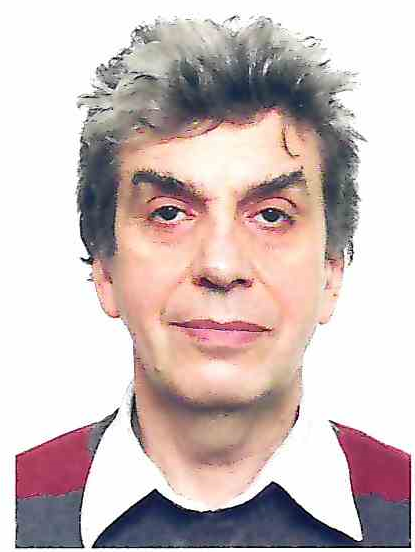
Prof. Sergey V. Bezzateev
ITMO University, Russia
Multilevel structured approach for digital watermarking: multimedia data protection survey and perspectives
Download slides (PDF): Multilevel structured approach for digital watermarking: multimedia data protection survey and perspectivesAbstract
Digital watermarking (DWM) is an efficient and well known approach for multimedia data protection. DWM technologies are based on information embedding methods that make it possible to add specific information into initial multimedia objects to protect them. Nowadays the number of visible and non-visible embedding methods are discussed in aspects of data protection and specifically in multimedia data protection. Here we discuss how to improve the effectiveness of non-visible DWM data embedding by jointly constructing multilevel object container structure, constructing corresponding error-correcting codes in weighted metrics, and implementing these approaches for different information embedding methods as for digital multimedia data watermarking as for digital image fingerprinting and secure compression. It is also discussed how this multilevel weighted approach could be used in a field of artificial intelligence technologies when solving information security issues.
About the speaker: Prof. Sergey V. Bezzateev
Sergey V. Bezzateev received the Diploma in Computer Science from Aerospace Instrumentation Institute of Leningrad, Soviet Union in 1980. In 1987 he received Ph.D. degree in Information Theory from the Aerospace Instrumentation Institute of Leningrad and in 2011 he received Doctor of science degree in Information Theory from the Saint-Petersburg University of Aerospace Instrumentation. From 1980 till 1993 he was employed by Aerospace Instrumentation Institute. He spent 1993-1995 as researcher at the Nagoya University, Japan, where he worked on Prof. Yoshihiro Iwadare Laboratory. From 1995 he was Associate Professor at Department of Information technologies and Information Security, State University of Aerospace Instrumentation (SUAI), Saint Petersburg, Russia. From 2004 till 2007 he was Project Leader in Joint Laboratory Samsung-SUAI on Information Security in Wireless Networks. From 2010, he was Professor and the head of Department of Information Security in SUAI. In 2013 he obtained the grant NordSecMobile 2013 and worked at Norwegian University of Science and Technology (NTNU) and Tartu University. From 2017 he becomes the Professor and director of Laboratory of Cryptography Methods for Security in ITMO University too. In 2022 he become Honoured Worker of Education of the Russian Federation. His main research interests include information security, coding theory and cryptography.
26–27 October · 16:30
Round tables
Two moderated discussions on 26 and 27 October, 16:30–18:00, in Room 306. Both are held in Russian.
Mon, 26 October · 16:30–18:00 · Room 306
New Trends in Cybersecurity
How quantum technologies and artificial intelligence are reshaping the cybersecurity landscape, and which fundamental and exploratory research is needed today.
- Moderator
-
- Sergei A. Petrenko Sirius University of Science and Technology
- Speakers
-
- Igor B. Saenko SPC RAS
- Eugine S. Abramov Southern Federal University
- Alexey M. Vulfin Ufa University of Science and Technology
- Ilya Yu. Popov ITMO University
- Aleksandr A. Menshchikov ITMO University
Schedule
- 16:30–16:45Opening remarks by Sergei Petrenko: “New Cybersecurity Challenges and Threats”
- 16:45–17:00Block 1. Current cybersecurity trends
- 17:00–17:15Block 2. Quantum and post-quantum cybersecurity
- 17:15–17:30Block 3. Applications of AI technologies in cybersecurity
- 17:30–17:45Block 4. Information security monitoring and operations management (SOC, MSSP, CERT, CIRT)
- 17:45–18:00Audience questions and wrap-up
Tue, 27 October · 16:30–18:00 · Room 306
AI and Cybersecurity
How artificial intelligence is changing the confrontation between attackers and defenders, which technologies have proven effective, and what this means for security professionals.
- Moderators
-
- Andrey A. Chechulin SPC RAS
- Michael I. Zabezhailo FRC “Informatics and Control” RAS
- Speakers
-
- Evgenia S. Novikova ETU “LETI”
- Darina V. Okuneva Gazinformservice
- Abdulkhamid Ya. Buchaev Alfa-Bank, ITMO University
Schedule
- 16:30–16:45Opening talk by Andrey Chechulin: “AI in Cybersecurity: A Tool for Defense, a Means of Attack, and an Object of Research”
- 16:45–17:10Block 1. Technologies and threats
- 17:10–17:30Block 2. Practice and implementation
- 17:30–17:50Block 3. Professionals and the future
- 17:50–18:00Audience questions and wrap-up